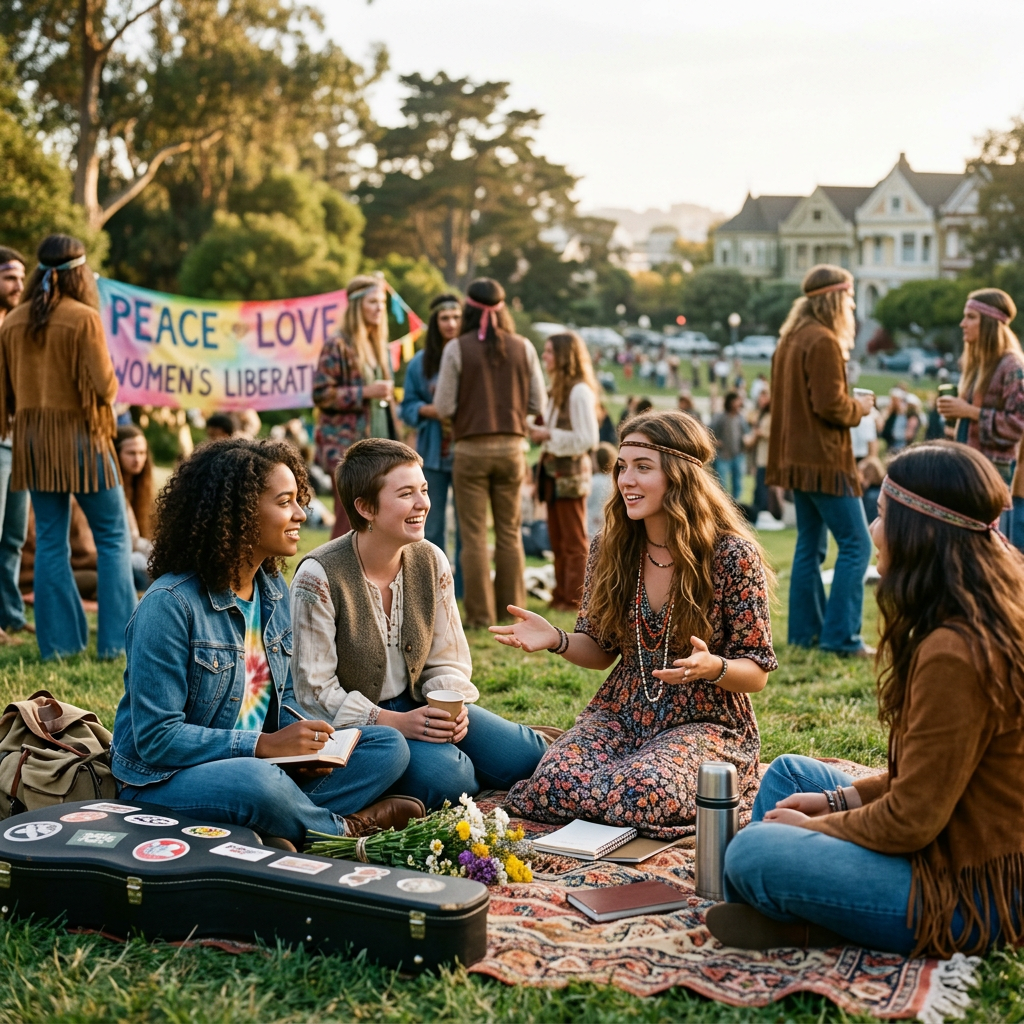
Exploring the Voices of Women in the 1960s Counterculture
The 1960s counterculture revolution shaped many aspects of Western society, especially for women who found themselves both participants and observers in a time of profound change. As traditional roles were questioned and personal freedoms began to blossom, women’s diaries from this era illuminate their unique experiences, struggles, and aspirations. Let’s dive into some influential diaries that reveal how these women navigated the complexities of their identities amidst the backdrop of social upheaval.
A New Freedom: Voices from the Beat Generation
One of the significant forerunners of the 1960s counterculture was the Beat Generation, a literary movement that introduced alternative lifestyles and challenged societal norms. Women like Diane di Prima and Joan Vollmer documented their experiences in personal diaries that reflect their quests for independence and self-expression. Di Prima, in her work “Revolutionary Letters,” provides insights not only into the literary activity surrounding her but also into the struggles of being a woman in those circles. Her writings often captured the tension of balancing personal ambition with societal expectations of womanhood.
For instance, in her diary entries, di Prima reflects on the limitations she faces as a female writer amidst the dominance of male figures. Despite the challenges, her passionate advocacy for women’s rights and artistic freedom shines. A particularly striking entry discusses her efforts to pursue writing even as she navigates her family responsibilities. This intersection of art and domesticity illustrates the dual pressures women faced during this transformative time. To read more about Diane di Prima’s legacy, you can explore the Poets.org.
The Civil Rights Movement: Activism and Reflection
While cultural shifts were essential, the social activism of the 1960s also had profound implications for women, particularly within the Civil Rights Movement. Diaries from women like Coretta Scott King and Angela Davis reveal their experiences as both leaders and advocates within this space. For example, Coretta Scott King, in her letters and diaries, articulated not just her support for her husband, Martin Luther King Jr., but also her own identity as an activist. Her writings include reflections on her fears, hopes, and the sacrifices she made in the name of justice and equality.
Angela Davis’s diaries present another perspective, as she explores radical politics and the fight against oppression. In her poignant reflections, she discusses her imprisonment and the injustices faced by women of color, providing an insight into how systemic racism affected women intersecting with both the civil rights and feminist movements. Angela Davis’s published writings are easily accessed via the Goodreads page, which showcases her literary contributions and activist legacy.
Women and Sexual Liberation: Shifting Paradigms
The sexual liberation movement also unfolded during the 1960s, which is captured powerfully in the diaries of women like Erica Jong and Betty Friedan. These diaries reflect a shift in attitudes towards sexuality, love, and the notion of female desire. Jong’s diary entries often grapple with the notion of sexual freedom against the constraints of societal norms. Her narrative details interactions that explore the tension between liberation and the expectations placed upon women in relationships.
Moreover, Betty Friedan’s seminal work, “The Feminine Mystique,” was influenced by her personal writings and diaries that articulate the dissatisfaction many women felt in traditional roles. Friedan’s reflections serve as a call to action, inspiring women to seek fulfillment beyond domestic spheres. Her insights are crucial when considering the impact of the feminist movement that emerged from these struggles. To learn more about Friedan’s work and influence, you may enjoy this brief video about The Feminine Mystique:
Exploring Diverse Perspectives: Latina and Black Women in the 1960s
It’s essential to highlight that the voice of women in the counterculture did not solely belong to white women; the perspectives of Latina and Black women also play a critical role. The writings of figures like Gloria Anzaldúa and Audre Lorde expand our understanding of the multicultural dimensions of the movement. Anzaldúa’s diary entries reflect her experiences as a queer Chicana, exploring issues of identity and intersectionality, while Lorde’s works denounce the dual oppression faced by Black women within both feminist and civil rights movements.
Their writings urge us to consider how cultural identity shapes women’s experiences, and they call for a more inclusive feminism that acknowledges race, sexuality, and class. Both authors contribute to a richer narrative that allows a deeper understanding of the struggles women faced during the 1960s.
The Aftermath: Reflecting on Legacy and Change
As the 1960s came to a close, the landscape of women’s lives began to shift again, leading to the developments we see in subsequent decades. The diaries of this era serve as crucial historical documents that preserve the thoughts, feelings, and struggles of women who took part in an upheaval of cultural norms. They remind us that the fight for equality and self-expression is a continuous journey; the aspirations documented in these diaries continue to resonate today.
By exploring these personal narratives, we uncover not just the challenges women faced, but also their resilience and courage. Understanding these stories empowers us to appreciate how far we’ve come while recognizing that the struggle for equality is far from over. It’s through these voices that we can learn about the diverse experiences that define womanhood and the importance of inclusive narratives in shaping our societal understanding.
Telling Their Stories Again
In recent years, there has been a resurgence of interest in how women’s personal narratives can contribute to a more comprehensive historical account. As scholars and enthusiasts continue to unearth these diaries and biographies, the conversations around gender, race, and activism only deepen. It’s essential to keep sharing, analyzing, and reflecting upon these experiences, as they not only document history but also encourage future generations to engage with their identities and society.
By digging into the personal accounts from this transformative decade, we create pathways to greater understanding and inspire ongoing dialogue about women’s rights and representation. Each diary is a testament to unique lives, offering vital lessons about the power of voice and the necessity for empathy when engaging with history.